
Introduction to Gage Creep
All materials creep when stressed. Creep is a time-dependent material property, so the standard of how you measure it is by how much the material continues deforming when it’s stressed by steady-state loading. Common engineering materials, like high-quality aluminums and tool steels, have extremely low levels of creep of <1 μm/m when loaded at normal transducer levels ≈ 1000 μm/m.
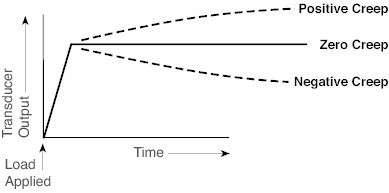
So what is a low level of creep? Think of something on the order of a fraction of one micron per meter. A normal transducer level is something on the order of a thousand microns per meter. Those are tiny numbers, but in legal-for-trade transducer applications, a fraction of a troy ounce error in weighing can result in thousands of dollars in erroneous charges – imagine, for example, if you’re weighing precious metals. So even very low levels of transducer creep are unacceptable.
Like everything else when placed under load, bonded electrical resistance foil strain gages also creep. But since they’re made using metal adhered to an organic carrier and bonded with an epoxy adhesive, strain gages tend to relax after loading. In other words, they creep towards their initial zero-load state.
Transducers operating with a dead weight loading do the opposite. When they’re placed under a steady dead weight load, they continue to elongate. In other words they have positive creep. Now, put these two together. Bonded strain gages want to relax and metal transducers want to expand. Together, they form the perfect union for achieving essentially zero creep performance from the transducer.




Recent comments